
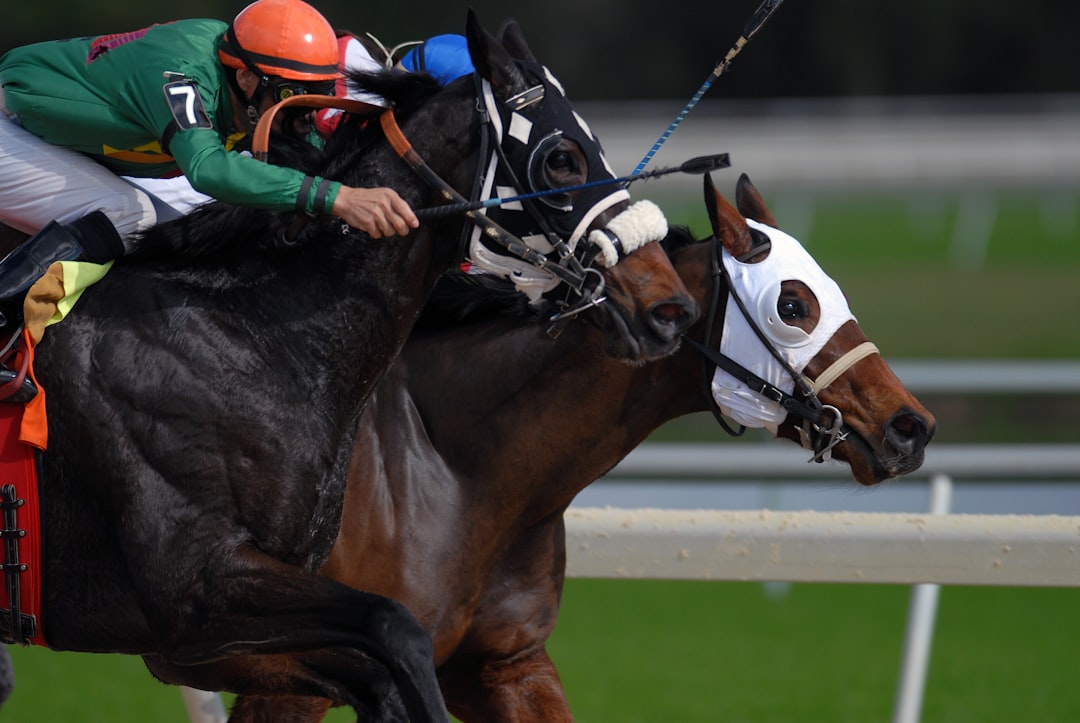
A promising ticket can lose much of its appeal before the horse runs a step.
The board shows 5-1, a bet is placed, and the gates open—then the price flashes 3-1. The frustration is understandable: the same selection now offers a much smaller potential return.
But pari-mutuel odds are estimates, not fixed quotes. They reflect how the win pool is divided at that moment. Money arriving late—sometimes in the final seconds and processed after betting closes—can heavily back one horse and shorten its odds. The bettor keeps the chosen horse and stake, but the payout is calculated from the final pool, not the price displayed when the ticket was purchased.
How the pool determines payouts
- Pari-mutuel pool
All win bets on the same race enter one pool. Bettors compete for portions of that money rather than wagering against the track.
- Takeout
Before payouts, the operator deducts a stated percentage for taxes, racing, and operating costs. The distributable pool is what remains.
- Winning share
After the result, the net pool is divided among winning tickets according to stake. A larger bet owns more units of the winning side.
- Tote odds
The displayed price estimates a ticket’s return from the money currently pooled—a key concept in a beginner’s guide to horse-racing bets. Because bets keep arriving, that estimate remains provisional until wagering closes.
A bookmaker generally locks in the displayed price when accepting a bet. A pari-mutuel ticket locks in only the stake and selection; its eventual return depends on the final pool.
A late-money recalculation
At 20% takeout, $1,000 leaves $800. With $200 on A: 3-1. Late $200 makes gross/net/A totals $1,200/$960/$400: 1.4-1. Bets move prices; rounding creates steps.
Reading pool changes
Runhorse Slots and Gaming explains pools, will-pays, and probable payouts.
Where late wagers come from
Late wagering is not automatically mysterious. Some comes from ordinary players betting near post time, while some arrives through simulcast outlets, mobile platforms, account-wagering services, or professional teams. Bets accepted before the cutoff may also reach the host pool in batches, making the visible change seem sudden.
What bettors are waiting to see
Waiting preserves information that an early wager cannot use:
- Scratches can reshape the field, pace, and value of the remaining runners.
- Warm-ups and appearance may reveal a horse moving freely—or looking unsettled.
- Track and weather changes can favor different running styles or alter confidence.
- Fresher pool totals show whether an attractive morning price is actually holding.
Large bettors and computer-assisted wagering groups often submit many bets close to the cutoff. Their models can compare pools and adjust stakes rapidly, so a sizable order may move short-priced horses noticeably, especially in smaller pools. That influence is real, but a late odds drop does not prove that informed insiders targeted a horse. It may reflect several unrelated wagers, automated balancing, delayed transmission, or simply a thin pool.
The displayed odds are therefore a snapshot, not a guarantee. Smaller pools and shorter prices are generally more vulnerable to visible late movement.
Why odds can change after the start
The wagering cutoff and the final odds update are separate events. When betting closes—often through a track’s stop-betting signal—no new wagers should be accepted, but bets already accepted may still be traveling through account-wagering platforms, tote hubs, or batch-processing systems.
The sequence can look like this:
- A wager is accepted before the cutoff.
- Its data reaches the host tote moments later.
- Pools from multiple sources are merged and recalculated.
- The revised odds appear after the race has begun.
That lag can produce a legitimate post-start screen change. The displayed update time does not necessarily show when the underlying wagers were accepted.
Cutoff procedures and tolerances vary by jurisdiction, track, and wagering network. A sharp late move therefore deserves context, not an automatic conclusion. Regulators can compare acceptance timestamps, transmission logs, video, and tote records to determine whether betting continued improperly.
Repeated cutoff failures, wagers timestamped after closure, unexplained log gaps, or unusual patterns tied to the same outlet merit investigation. A screen change alone is not proof, but documented timing anomalies should not be dismissed.
What an odds move really says
They prove only that the runner attracted a larger pool share.
The money may come from specialists, automated models, casual enthusiasm, or one large wager.
The market’s relative support changed; the runner’s ability did not.
Money may simply have concentrated elsewhere, potentially leaving a more attractive price behind.
Pool size determines how meaningful the move may be.
In a small pool, one ordinary bet can shift displayed odds dramatically without broad agreement.
Before reacting, consider pool size, timing, and the amount of money required to cause the change. Odds movement can supplement handicapping, but chasing every drop risks replacing judgment with an unexplained market signal.
The ticket gets the final price
A win bet joins the pari-mutuel pool at the time it is accepted, but it does not preserve the odds displayed then. Every valid ticket on the winner is settled from the finalized pool, after late wagers, takeout, and applicable rounding have been accounted for.
Converting odds into a $2 return
Final odds state the approximate profit relative to the stake. For a standard $2 win ticket, the stake is then added back to estimate the total return:
- 3-1: about $6 profit, for an $8 total return
- Even money (1-1): about $2 profit, for a $4 total return
- 4-5: about $1.60 profit, for a $3.60 total return
Actual posted payouts can differ slightly because racing jurisdictions apply breakage and other rounding rules.
The 4-5 example is odds-on: the expected profit is smaller than the amount risked. That is the practical meaning of odds-on prices for bettors. A winning $2 ticket still returns more than $2 overall, but only $1.60 of that amount is profit; the other $2 is the original stake being returned.
Consequently, a ticket bought while the board showed 2-1 might ultimately pay at 6-5—or at 3-1—depending on where the pool stands when betting closes.
Why the posted return may differ
Final odds provide a close estimate, but the tote system settles wagers under the track’s official payout rules. Breakage is the most common source of a small difference: after the pool calculation, the return may be rounded down to a prescribed increment rather than paid to the exact cent. The increment and treatment of the remainder vary by jurisdiction.
For example, mathematical odds might imply a $7.98 return on a $2 win bet, while the official payoff is $7.90. Displayed odds may also be simplified, so multiplying the board price by the stake does not always reproduce the declared dividend exactly.
A dead heat creates a larger adjustment. The available pool is generally divided among the tied winners before each group of winning tickets is paid. As a result, each horse’s return is usually lower than it would have been as the sole winner. The precise handling follows local dead-heat and pool-adjustment rules, which can also affect exotic wagers differently.
A repeatable way to handle moving prices
- Track both odds and pool growth
Record a few snapshots rather than reacting to every update. An odds move accompanied by substantial new money carries more context than the same move in a barely changing pool.
- Set a price floor
Before betting, decide the lowest acceptable odds based on the runner’s estimated chance. If the displayed price falls below that threshold, the disciplined response is to pass or reduce the stake.
- Account for pool depth
Small pools can swing sharply from modest wagers, so the displayed price deserves a wider margin for error. Deeper pools are usually steadier, though large late submissions can still move them.
- Watch the relevant pool
Win odds do not directly determine exacta, trifecta, or multi-race payouts. Those wagers have separate pools; understanding how daily double pools form helps prevent a win-pool move from being mistaken for an exotic price signal.
- Choose a practical betting time
Waiting can reveal late odds, pool growth, and trackside information, but it also increases the risk of missing the cutoff. A repeatable routine leaves enough time for the wager to be accepted.
One sudden update may reflect delayed money or a temporary pool imbalance. It is not a command to follow the crowd. If the final-looking price no longer clears the preset minimum, letting the race go is often the cleaner decision.
Selection and price should be judged separately. Handicapping identifies a plausible winner; wagering asks whether the available odds pay enough for the uncertainty. A winning pick can still be a poor bet, while a losing ticket can represent a sound value decision.