
The plus or minus sign tells the payout story before any arithmetic begins.
A betting board showing +150, -120, and 2.40 can make two otherwise similar wagers awkward to compare at a glance. The first useful move is simply to separate the American prices by their sign: a plus price is the potential profit on a $100 stake, while a minus price is the amount that must be staked to make $100 profit.
So +150 means a $100 wager returns $150 in profit, plus the original stake; -120 means $120 is needed for $100 profit. That distinction prevents the common mistake of treating the number after the sign as the same kind of figure. Once the sign is clear, each price converts cleanly to decimal odds and total returns become directly comparable.
Read the sign before the number
The first check is always the sign. A plus sign and a minus sign describe opposite betting situations, even when the figures look similar.
A positive line such as +150 usually marks the less-favored selection. It means a $100 stake would return $150 profit, plus the original $100 stake if it wins. Smaller positive numbers offer less profit per $100; for example, +110 pays less than +300.
A negative line such as -150 usually marks the favored selection. It means $150 must be risked to make $100 profit. The larger the number after the minus sign, the more must be staked for that same $100 gain: -300 requires twice the risk of -150.
Do not treat +150 and -150 as comparable prices simply because their digits match. The sign tells whether the number states potential profit or required risk.
Plus = win shown on a $100 stake.
Minus = stake required to win $100.
Read this rule before applying any conversion formula.
Convert positive American odds
For positive American odds, divide the number after the plus sign by 100, then add 1:
Decimal odds = (American odds ÷ 100) + 1
The added 1 is important. It represents the original stake, so decimal odds always describe the total return, not profit alone.
Work through +150
A line of +150 means a $100 stake earns $150 in profit. Divide 150 by 100 to get 1.5, then add 1:
(150 ÷ 100) + 1 = 2.50
At decimal odds of 2.50, a $100 winning bet returns $250 in total: the $150 profit plus the $100 stake. For a different stake, multiply it by 2.50. A $20 bet, for example, returns $50 total and produces $30 profit.
Useful benchmarks
These common lines become easy reference points:
| American odds | Decimal odds | Total return on $100 |
|---|---|---|
| +100 | 2.00 | $200 |
| +150 | 2.50 | $250 |
| +200 | 3.00 | $300 |
| +300 | 4.00 | $400 |
A quick mental shortcut is to read +200 as 3.00 and +300 as 4.00: each extra 100 adds 1.00 to the decimal price. Lines such as +125 or +175 follow the same formula; no separate rule is needed.
Convert negative American odds
Negative American odds describe the stake required to make $100 profit, so the conversion runs in the opposite direction from plus odds. First ignore the minus sign, divide 100 by that number, then add 1.
Formula:
Decimal odds = (100 ÷ absolute American odds) + 1
For a clean example, -200 becomes:
(100 ÷ 200) + 1 = 1.50
A $20 bet at 1.50 returns $30 in total: the original $20 stake plus $10 profit.
The same method works when the number is less tidy. For -135:
(100 ÷ 135) + 1 = 1.7407...
Rounded to two decimals, that is 1.74. A $50 stake would return about $87.04, for roughly $37.04 profit. Sportsbooks may round displayed returns by a cent, so minor differences are normal.
As the negative number grows larger—such as -300 or -500—the decimal price moves closer to 1.00. That reflects a stronger favorite: less profit is offered for each unit staked.
Recognize common odds at a glance
A small set of lines appears so often that their decimal equivalents become easy to remember. These figures include the original stake.
| American odds | Decimal odds | Quick reading |
|---|---|---|
| +100 | 2.00 | Even money |
| +150 | 2.50 | $100 returns $250 total |
| +200 | 3.00 | Doubles the profit at even risk |
| -110 | 1.91 | Standard point-spread reference |
| -150 | 1.67 | $150 risked returns $250 total |
| -200 | 1.50 | $200 risked returns $300 total |
-110 is the useful benchmark. It converts to 1.909…, normally displayed as 1.91. On a single small wager, that rounding is usually adequate for comparing prices. For example, 1.91 is clearly less favorable than 2.00, while 1.95 is a better price than 1.91.
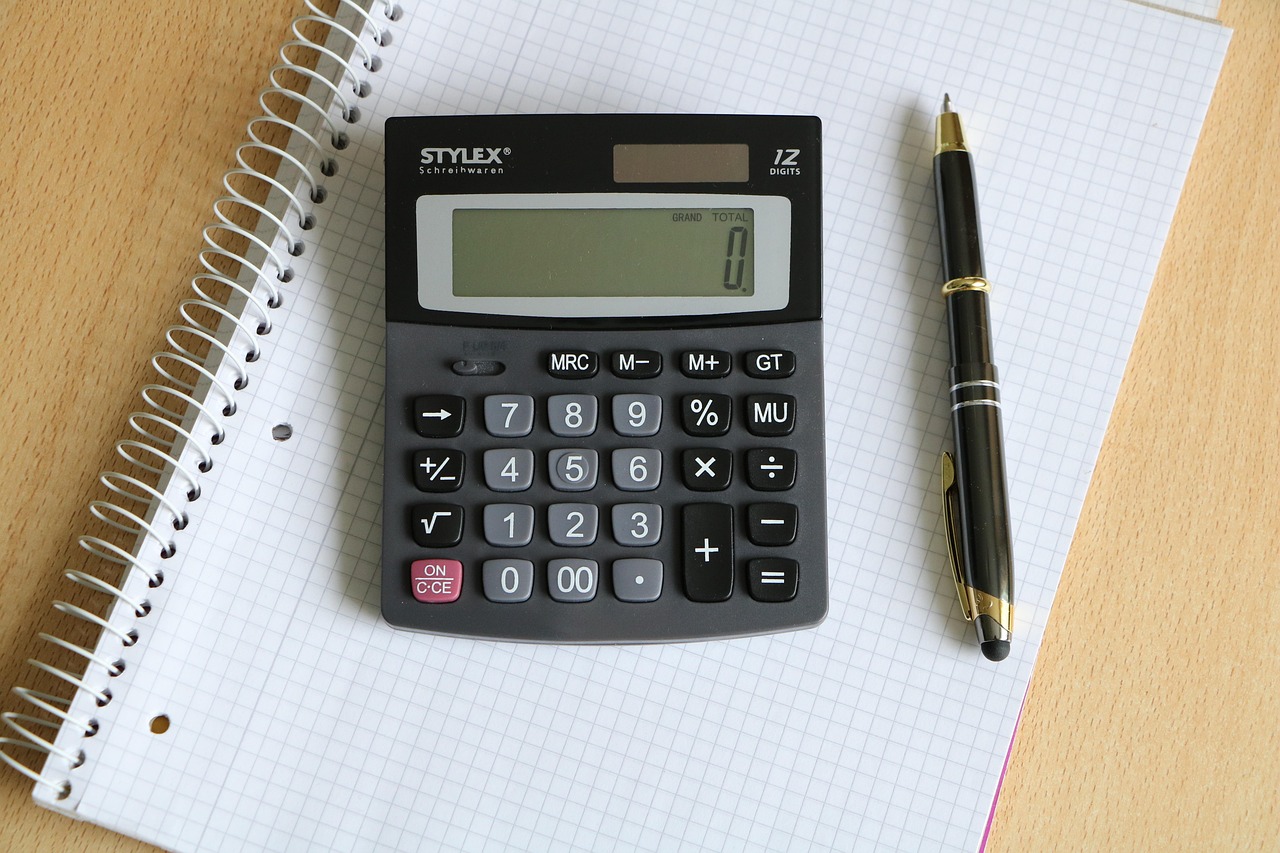
A calculator is wiser when stakes are large, several selections are combined in a parlay, or two close prices are being compared. Carry extra decimal places through the calculation, then round only the final payout to cents.
For negative odds, decimal odds must fall between 1.00 and 2.00. If a converted favorite produces 2.40, the sign or formula has likely been mixed up.
Compare return and profit on equal stakes
A decimal-odds calculation produces the total return, not just the money gained. Multiply the stake by the decimal odds to find the amount paid back if the selection wins. Then subtract the original stake to find net profit.
For a $20 stake at 2.50 (+150):
- Total return: $20 × 2.50 = $50
- Net profit: $50 − $20 = $30
The distinction matters because the $20 stake is part of the $50 return. Treating the full return as profit overstates the result.
Why equal stakes make the difference clear
Put the same $20 on a typical favorite at 1.50 (−200) and an underdog at 2.50 (+150):
| Selection | Total return | Net profit |
|---|---|---|
| Favorite at 1.50 | $30 | $10 |
| Underdog at 2.50 | $50 | $30 |
The underdog offers the larger payoff because it is considered less likely to win. That extra return is compensation for a lower implied probability, not proof that the underdog is the better bet. Value depends on whether the bettor thinks the true chance of winning is higher than the odds suggest; payout alone cannot answer that.
See payouts clearly on a $25 stake
A fixed $25 stake gives a quick, like-for-like comparison between American lines. Convert each price to decimal odds, multiply by $25, then subtract the original stake to find profit.
| American odds | Decimal odds | Total return | Profit |
|---|---|---|---|
| +150 | 2.50 | $62.50 | $37.50 |
| -110 | 1.91 | $47.73 | $22.73 |
| -200 | 1.50 | $37.50 | $12.50 |
The +150 selection pays most because it is the underdog; the -200 favorite pays least because the market considers it more likely to win. In a moneyline bet explained, the wager is simply on which side wins outright, so these prices are the market’s shorthand for relative likelihood.
A larger payout is not automatically better
Payout arithmetic shows what happens if the bet wins, not whether the wager is worthwhile. A $25 bet at +150 earns $37.50 in profit, but it still loses the full $25 whenever the selection loses. The relevant question is whether its real chance of winning is better than the chance implied by the odds.
For example, +150 implies roughly a 40% win probability. If an informed estimate puts the selection closer to 45%, the price may offer value; if its true chance seems closer to 35%, the attractive payout does not fix the poor price.
Payout comparisons that go wrong
It only pays more on the same stake.
Higher odds also imply a lower chance of winning; value depends on price versus the bettor’s estimate.
They show total return, including the original stake.
At 1.91, a $25 bet returns $47.73, of which $22.73 is profit.
+150 and -150 use different meanings.
One describes profit on $100; the other describes the stake required to win $100.
- Confirm the displayed format
Check whether the book or exchange shows American, decimal, or fractional odds.
- Read the sign
Use the positive or negative American formula.
- Convert to decimal
Keep a few decimal places for close comparisons.
- Multiply by the same stake
This gives total return; subtract stake for profit.
- Compare like with like
Use the same selection, market, and stake before judging prices.
A simple routine before a wager
Read the sign, convert the line, and multiply by an equal stake. Then separate total return from profit before comparing offers.
Most importantly, confirm the odds format displayed by the sportsbook or exchange; a familiar-looking number can mean something very different in another format.