

BetUS

BetNow

MyBookie

Bet105

BUSR Sports

Everygame Sports

BetOnline

BetWhale

BetAnything

Xbet

Bovada

Bookmaker
Props can be party games or pocket drains—deciding which matters.
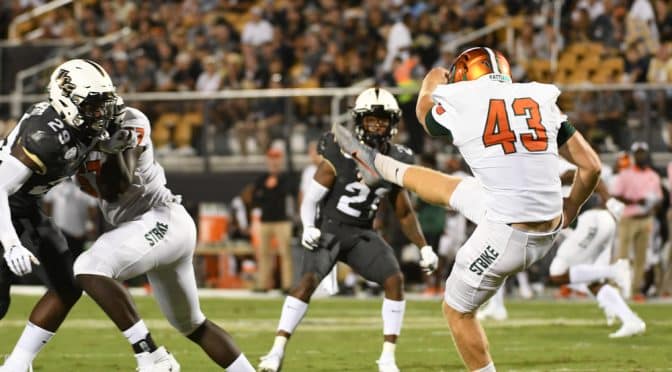
At a Super Bowl watch party, a friendly wager on the coin toss or first touchdown sparks laughs and high-fives. What feels like harmless fun masks real mechanics: sportsbooks set prices with built-in margins and limited information, so small stakes can still carry a meaningful expected loss.
For the hobbyist, prop markets are intoxicating—novel markets reveal niche edges sometimes, but variance and information asymmetry often turn them into traps. A short, practical primer helps separate gimmicks from genuine opportunities before any money changes hands.
- Typical sportsbook vig on props: roughly 5–10%.
- Single-event props have very high variance.
- Bankroll tip: limit prop exposure to 1–2% per ticket.
Core Proposition Bet Categories
Player props
Bets on an individual player's in-game statistics or outcomes, usually for a single contest. Examples: LeBron James over/under 25.5 points, a quarterback to throw 2+ touchdown passes, or a pitcher to record 7+ strikeouts.
Team props
Bets tied to team-level events inside one game rather than the final winner. Examples: which team scores first, team total points over/under 28.5, or margin-of-victory ranges.
Novelty props
Unconventional or entertainment-focused bets often tied to moments or non-sport events. Examples: coin toss result at the Super Bowl, length of the national anthem, or the color of the Gatorade dumped on a coach.
Futures
Longer-term proposition markets that resolve after a season or tournament. Examples: Super Bowl winner, season MVP, or a player finishing as the league’s top scorer.
Market motivations
Books offer props to boost engagement and viewership with more betting options; liquidity concentrates volume on popular lines, tightening odds; and price differences across books create arbitrage opportunities that skilled bettors can exploit.
Turning probabilities into lines
Sportsbooks start with a probability estimate—usually a statistical model or an experienced trader’s view of an event’s chance. That raw probability is the foundation, but it rarely appears as a published line.
From probability to price
Conversion follows a few practical steps:
Top Sportsbook Picks for October 2026
BetUS
BetNow
MyBookie
Bet105
BUSR Sports
Everygame Sports
BetOnline
BetWhale
BetAnything
Xbet
Bovada
Bookmaker
- Model output: a probability for each outcome (e.g., 47% chance of Over).
- Smoothing and rounding: probabilities are adjusted to avoid extreme spikes and converted into convenient price points (standard odds increments or whole-number lines).
- Built-in margin: books add a vig (vigorish) so the sum of implied probabilities exceeds 100% — that gap is the bookmaker’s edge.
Operational concerns then reshape lines in real time. Exposure management (limiting liability on one result), the mix of retail versus sharp money, and risk limits can push a line away from the pure predictive probability. Heavy action from professional bettors typically moves prices more than casual bets.
For readers wanting the arithmetic — how implied odds, margin and rounded lines are calculated step‑by‑step — consult the detailed calculations for player prop odds.
Lines are not pure forecasts. They reflect a probability estimate plus a margin and business-driven adjustments like exposure control and bettor mix.
Settlement rules: why they matter
Settlement rules determine whether a prophecy becomes a win, loss, or push — and different books rely on different official sources. Typical providers include league box scores and data vendors such as Elias, Sportradar, Opta/Stats Perform, and sometimes the league’s official report. To see a sportsbook’s preferred feed, check the official stat source used to settle bets.
Common void or tie scenarios
- Overtime: some props include OT, others don’t. Clarify before wagering.
- Partial or abandoned games: early stoppages often void props unless a minimum is specified.
- Stat corrections and overturns: official corrections after the game can flip results.
- Off-field technicalities: bets on player appearances may void if listed but inactive.
Edge cases that flip outcomes often look trivial: a 99-yard receiving game later credited as 100 yards when a stat is reassigned; a first-goal scorer changed after review; or a punt return TD in a game that’s later ruled a dead ball. Even a late stat correction published hours later can turn a losing ticket into a winner — or vice versa.
Habit: always read the sportsbook’s settlement rules for that market. When in doubt, screenshot the rule page before placing a bet.
Check the market’s settlement rule before wagering. A one-sentence rule — include OT or use league box score — decides many props.
Reading prop-line movement
Line shifts carry two broad messages: public sentiment (volume from casual bettors) and sharp money (few large, informed wagers). Books display both but sometimes smooth or delay changes to manage exposure — small early bets may disappear from the public ledger even if serious information exists.
Watch for information-driven jumps tied to injuries, weather, or inactive lists. Sudden, sustained moves after official team announcements or verified reports are more actionable than slow, scattershot drift.
Key signals to track:
- Sharp money: big size + little ticket count; lines move quickly and stick.
- Public pressure: high ticket count with little size; books may move limits or adjust vig instead of price.
- Information pulses: line spikes right after injury reports or weather alerts often reflect real probability change.
For timing details and common pregame patterns, consult the pre-kickoff movement explainer.
Q&A
Is early value real? Early value can exist but is risky; only persistent, info-driven movement or clear sharp action validates it.
When does movement matter most? Movement matters most within tight windows after credible information or when sharp money forces a price that remains stable into close.
A compact expected-value checklist
Start by turning the posted price into an implied probability. Convert American or fractional odds to decimal odds, then compute: implied probability = 1 / decimal odds.
Next, remove the bookmaker's vig so probabilities sum to 100%. For two-outcome markets, normalize each implied probability by dividing it by the sum of both implied probabilities. The result is the fair market probability.
Quick EV checklist
- Convert the line to decimal odds and compute implied probability.
- Normalize probabilities to remove vig: fair_prob = implied_prob / sum(implied_probs).
- Compare model probability (internal estimate) to the fair_prob.
- Compute expected value per $1: EV = model_prob * (decimal_odds – 1) – (1 – model_prob).
A simple decision rule: if model_prob > fair_prob and EV > 0, the wager is +EV in expectation. Prefer bets with larger EVs and reasonable edges, not tiny differences that vanish with variance.
For a step-by-step walkthrough with worked numbers, consult a worked example on calculating EV after juice.
Track outcomes and evaluate performance over many bets — statistical edges become meaningful only across a sample, not one-off plays.
Practical controls: when to wait, how much to stake, and hedging checks
- Decide to wait or lock
If material news (injury, weather, lineup) is pending, pause; small lines arent worth locking under uncertainty. Lock only when model EV comfortably exceeds costs and liquidity is thin.
- Run a quick arbitrage check
Scan 2–4 books for the same market, convert odds to implied probabilities and look for overlaps that guarantee profit. Confirm identical settlement rules and size limits before placing cross-book hedges.
- Simple bankroll and sizing rules
Use a flat-percent plan (1–2% per prop) or a capped Kelly-lite (fractional Kelly) to limit variance. Avoid putting a large portion of the bankroll on single low-frequency props.
- Plan for reduced limits and account actions
Rotate sportsbooks, vary stake sizes, and avoid repetitive, highly correlated winners that flag accounts; spread exposure across markets to preserve access. Keep records to contest unexpected restrictions.
- Watch operational frictions and traps
Confirm official stat sources, void/tie rules, and acceptance timestamps; account for delayed settlements, line cancellations, correlated losses, and bonus playthrough terms.
Watch for these pitfalls:
Account limits and shadow-banning after repeated winners. Settlement mismatches when sportsbooks use different official stats. Chasing lines after a loss or ignoring liquidity and acceptance speed.Keeping stakes modest, documenting bets, and confirming settlement rules ahead of time prevents most surprises.



Which metrics actually move player props
Player props are most sensitive to a few clear, measurable inputs. Focus first on four items that regularly change outcomes:
- Snap share — how much of the offense a player is on the field for; a drop usually kills counting props.
- Target share — for receivers and pass-catching backs, targets map directly to yards and catches.
- Usage — running back carries + routes + pass-game role; touchdown chances rise with goal-line usage.
- Game script — expected score margin and pace change opportunities for volume and garbage-time stats.
When a heuristic is enough vs when to model
A simple rule (e.g., take a three-game snap/target average and adjust for injury news) is often adequate for high-volume, stable roles. Build a small model when samples are sparse, roles rotate, props depend on rare events (touchdowns), or cross-game factors matter. Start with opponent-adjusted rates and a game-script simulator; add more features only if backtesting shows consistent edge.
See related deep dives and data sources below to move from rules-of-thumb to reproducible models.




Pre-bet checklist
- Confirm settlement rules
Identify the official stat source and void/tie conditions so outcomes don’t settle unexpectedly.
- Calculate implied vs. fair probability
Convert the line to implied probability and compare with a model or informed estimate to find edges.
- Adjust for juice
Remove vig to see true value; small margins vanish once juice is applied.
- Check recent movement and timing
Look for sharp timing, injury updates, or news-driven shifts that change value quickly.
- Verify limits and size the stake
Confirm sportsbook limits and set a stake and exit plan that fits bankroll rules.
Key takeaways
- Settlement definitions can flip results — always confirm them.
- Removing juice reveals true expected value.
- Line movement and limits convey market information.
Follow this checklist before placing a prop to reduce surprises and spot real edges. Use the linked guides to calculate EV, choose reliable data, and confirm which stat source settles the market.
Top Sportsbook Picks for October 2026
BetUS
BetNow
MyBookie
Bet105
BUSR Sports
Everygame Sports
BetOnline
BetWhale
BetAnything
Xbet
Bovada