

BetUS

Bet105

BetOnline

BetWhale

BetAnything

Xbet

Bovada

MyBookie

Bookmaker

BetNow
A moving line is a signal, not a bet.
An hour before kickoff, a phone buzzes repeatedly: one sportsbook shifts a spread half a point, another adjusts the moneyline, then the first moves back. Across several games, the alerts pile up just as the useful change becomes easy to miss.
Not every move leaves a worthwhile price. A favorite shortening from -110 to -125 costs more to back; an unchanged -110 at a slower book may be worth checking. A useful alert draws attention to a meaningful change, but the decision still depends on what price is available now and how it compares with the wider market.
Choose what price the alert tracks
Start small: follow two or three NBA games and select the moneyline market. Pick the same team in each price view. Otherwise, an alert might compare the Knicks’ price to win with their opponent’s price, making the move look more dramatic than it is.
The reference price determines what an alert actually means:
Top Sportsbook Picks for October 2026
BetUS
Bet105
BetOnline
BetWhale
BetAnything
Xbet
Bovada
MyBookie
Bookmaker
BetNow
- Selected book: Has the price at one sportsbook changed? This is useful when that book is where bets would be placed.
- Consensus price: Is the broader market moving? A cross-book reference can help distinguish a market-wide shift from one book adjusting its own line.
- Best available price: Has the most favorable offer among accessible books changed? This matters when the goal is to find a price that can still be taken, not merely observe a move.
Suppose the Knicks moneyline falls from +145 to +125 at the selected book, while the consensus moves only from +138 to +130. If another accessible book still offers +142, the first book’s drop has not erased the better option. Those numbers answer different questions; they should not be treated as three confirmations of the same move.
Set the first alert against the reference that matches the intended action. The best betting tools for beginners can help narrow down which books and prices are practical to track.
Set a move threshold worth checking
For a liquid pregame market, a 10–20-cent change in American odds is a reasonable starting point for an alert. A smaller threshold may fire on routine price adjustments; a larger one may miss a move while it is still useful to investigate. This range is not a universal preset: thinner markets can jump farther on little action, while active markets may change repeatedly before settling.
Suppose a team is priced at −110 and later moves to −125 at the tracked book. That is a 15-cent move toward the team: its odds have shortened. It is not a better price for betting that team. A bettor would now risk $125 rather than $110 to win $100, so the alert calls for a price check, not an automatic bet.
Cents alone do not describe the size of every shift equally. At −110, the price implies about 52.4% probability; at −125, about 55.6%—a rise of roughly 3.2 percentage points. By comparison, −200 to −215 is also a 15-cent move, but its implied probability rises only from 66.7% to 68.3%, about 1.6 points. Implied probability for alert thresholds makes moves at different price levels easier to compare, though it does not remove the bookmaker’s margin.
Start with a threshold suited to the market being watched, then review a few days of alerts. If most flag ordinary repricing, raise it; if important moves are appearing only after the price has changed substantially, lower it.
When an alert fires, confirm that the betting line and market are unchanged. A spread moving from −3 to −3.5 is different from the price on −3 shifting from −110 to −125.
Separate line moves from price changes
A spread or total can change without the odds changing, and the odds can change while the number stays put. Set line-move alerts for changes to the spread or total itself: a football spread moving from -2.5 (-110) to -3 (-110) has shifted half a point. Set price-change alerts for odds movement at an unchanged number: -3 (-110) becoming -3 (-125) is a 15-cent price change, not a half-point move.
A half-point deserves more attention when it reaches or passes a consequential number. In football, 3 and 7 matter because games often finish with those margins. A move from -2.5 to -3 can therefore be more significant than one from -5.5 to -6, even though both are half a point. Totals need their own judgment: a round number is not automatically important, and the value of a half-point depends on how often games in that sport finish near it.
Keep the triggers separate in the alert settings:
- Line alert: Notify when the spread or total moves by the chosen amount; consider a tighter threshold around a consequential number.
- Price alert: Notify only when the spread or total is unchanged and the odds move by the chosen cent threshold.
If the app cannot make price alerts conditional, check whether it groups simultaneous updates. Otherwise, one bookmaker adjustment may produce two notifications for the same market change.
Set a notification window that fits
An alert is most useful when there is time to check whether another book still offers a better price. Set push notifications to start when line comparisons are practical and stop at game time, unless live betting is part of the plan. Check the app’s time zone before saving the schedule, especially for games in another region.
Broad monitoring can stay on for context without sending a push for every change. A morning check of overnight movement can show where a line started and how far it has traveled. For immediate alerts, a narrower window—perhaps the few hours before kickoff—often makes more sense, particularly when injury news or confirmed lineups may move prices quickly.
Overnight moves rarely need to wake anyone up if no comparison or wager will happen until morning. Where the app allows it, send them to a quiet feed or digest, then review the current prices when the day starts. If a market is important enough to justify overnight pushes, keep the threshold higher than the daytime setting. That limits interruptions from small changes that may be gone—or already reflected across books—by the time they can be checked.
Choose books and keep alerts readable
An alert is most useful when it tracks sportsbooks where a bet could actually be placed. Select the books that are available and worth checking; adding inaccessible books may make a move look actionable when it is not.
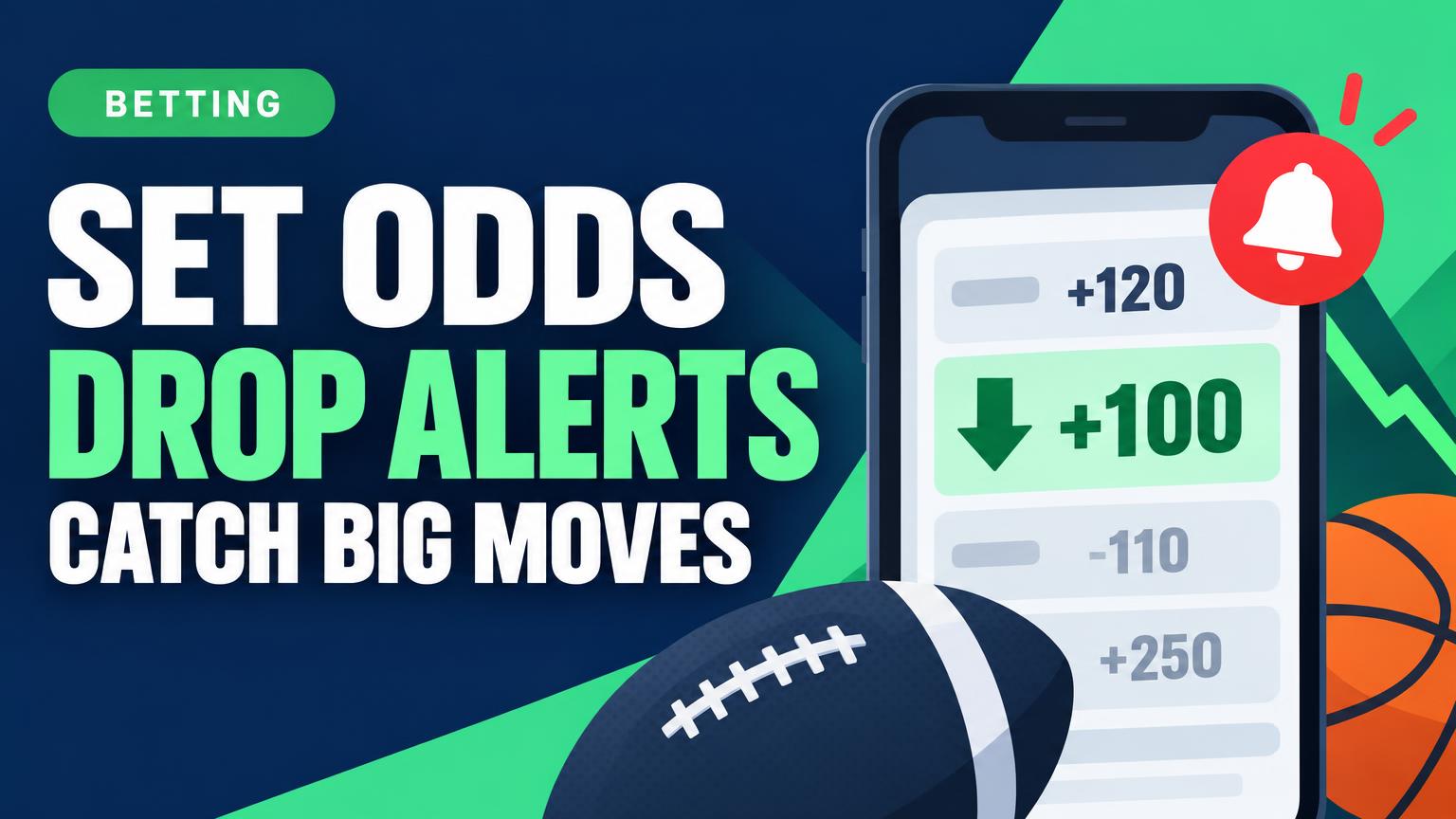
Decide whether one-book movement is enough to trigger a notification or whether several monitored books must move in the same direction. A one-book alert can catch a brief opportunity, but a lone outlier deserves a second look: the price may be stale, corrected quickly, or available only at a low limit. A broader-shift alert is less sensitive but gives stronger evidence that the market has moved. For example, if one book cuts a price from +120 to +100 while the others remain near +120, compare the available offers before treating it as a market-wide drop.
For delivery, reserve push notifications for moves worth checking promptly. Email can hold lower-priority alerts for later review. A short cooldown—such as 10 minutes for the same selection—prevents repeated pings as a price flickers around the threshold. Group further changes into one update that shows the book, previous price, current price, and time; a fresh alert should still appear if another monitored book joins the move. When several alert types are active, it also helps to combine odds alerts into one feed so the same selection is easy to follow.
Check whether the alerts are useful
- Run a dry test
Leave the settings in place for several days without acting on the notifications. Include a normal mix of busy and quiet periods so one unusual game does not drive the verdict.
- Log each trigger
Record the alert time, market, line, price, book, and reason it fired. Add the best price actually available at an accessible book when the alert was seen.
- Check what happened afterward
Compare each alert with later prices and line movement history. Note whether other books followed, the move reversed, or the quoted price vanished before it could be checked.
- Count misses and noise
Look for meaningful moves that produced no alert, then count alerts caused by brief outliers or repeat updates. Note whether each useful notification arrived with enough time to compare prices.
- Change one setting
Lower the threshold for missed moves, narrow the book list for isolated noise, adjust the notification window for late alerts, or lengthen the cooldown for repeats. Change only one, then test again.
A historical chart can show that an alert spotted a real shift without showing whether the earlier price was still available. Keep the price seen at review time separate from the price that triggered the alert; that gap is often the most useful test of timing.
A workable first rule might track NBA moneyline odds at one accessible book: send an alert when the price drops by 15 cents between 9 a.m. and tipoff. Set a review date two weeks later, after several games have produced alerts.
An alert is a prompt to check, not a bet recommendation. Before acting, confirm the current available odds and look for a reason for the move, such as injury news or a changed lineup. If the rule mostly catches brief outliers or repeat notifications, reduce false positives from alerts before adding another market.
Top Sportsbook Picks for October 2026
BetUS
Bet105
BetOnline
BetWhale
BetAnything
Xbet
Bovada
MyBookie
Bookmaker